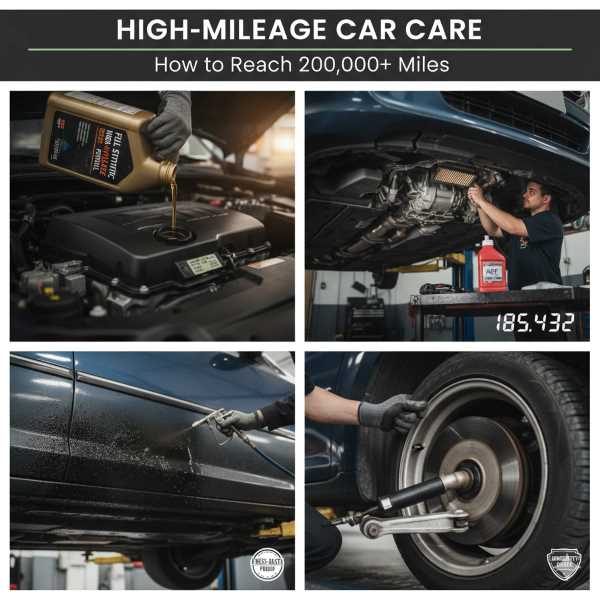
If your odometer is already past 100,000, the rules change slightly. The goal shifts from “prevent problems” to “manage wear.”
Key strategies for high-mileage vehicles
- Oil changes – Switch to full synthetic and shorten interval to 4,000–5,000 miles (or every 6 months).
- Transmission service – Most automatics benefit from a fluid + filter change every 60,000 miles; many shops still skip this.
- Cooling system – Flush and replace coolant every 5 years or 100,000 miles, whichever comes first.
- Fuel system – Use top-tier gasoline and add a fuel-injector cleaner every 30,000 miles.
- Suspension & steering – Replace shocks/struts and control arms when the ride becomes bouncy, or steering feels loose.
- Timing belt/chain – If your engine has a timing belt or chain, replace it at the manufacturer’s interval (often 60–100k miles), even if it “still looks fine.”
- PCV valve & breather – Replace these often-overlooked parts; they prevent sludge buildup.
- Rust prevention – Annual undercoating or oil spray in rust-belt states.
Golden rule: Never ignore a warning light. On high-mileage cars, small issues (oxygen sensor, EGR valve, etc.) can cascade into major failures within weeks.
Final thought for all three posts: Your car is the second-largest purchase most people ever make. Treat it as a $30,000–$60,000 investment rather than an appliance, and it will reward you with reliability, safety, and strong resale value for years to come.
Drive safe!